Reviewed by Evan Lewis, PhD. Last updated 10 August 2026.
A foot spray is a daily step for anyone who spends long hours in closed shoes. Nurses, tradespeople and athletes share one problem: warm, damp footwear that never fully dries between wears. Spraying the feet and the inside of the shoe keeps both halves of that cycle clean.
What do nurses, tradespeople and athletes have in common?
Closed shoes, long hours and shared floors. Whatever the job or the sport, the foot problem is identical. Sweat builds up inside footwear that never gets the chance to dry out. That warm moisture feeds the bacteria behind foot odour and the fungi behind athlete's foot and nail infections.
This is not a small group. StatPearls puts tinea pedis at roughly 10% of the population and says plainly that wearing occlusive shoes for extended periods predisposes people to dermatophyte infections, with the risk rising when the feet sweat heavily. Add shared floors like hospital wards, job sites, locker rooms and training mats, and you have constant re-exposure.

Three jobs, three kinds of footwear, one shared problem: warm damp shoes that never fully dry.
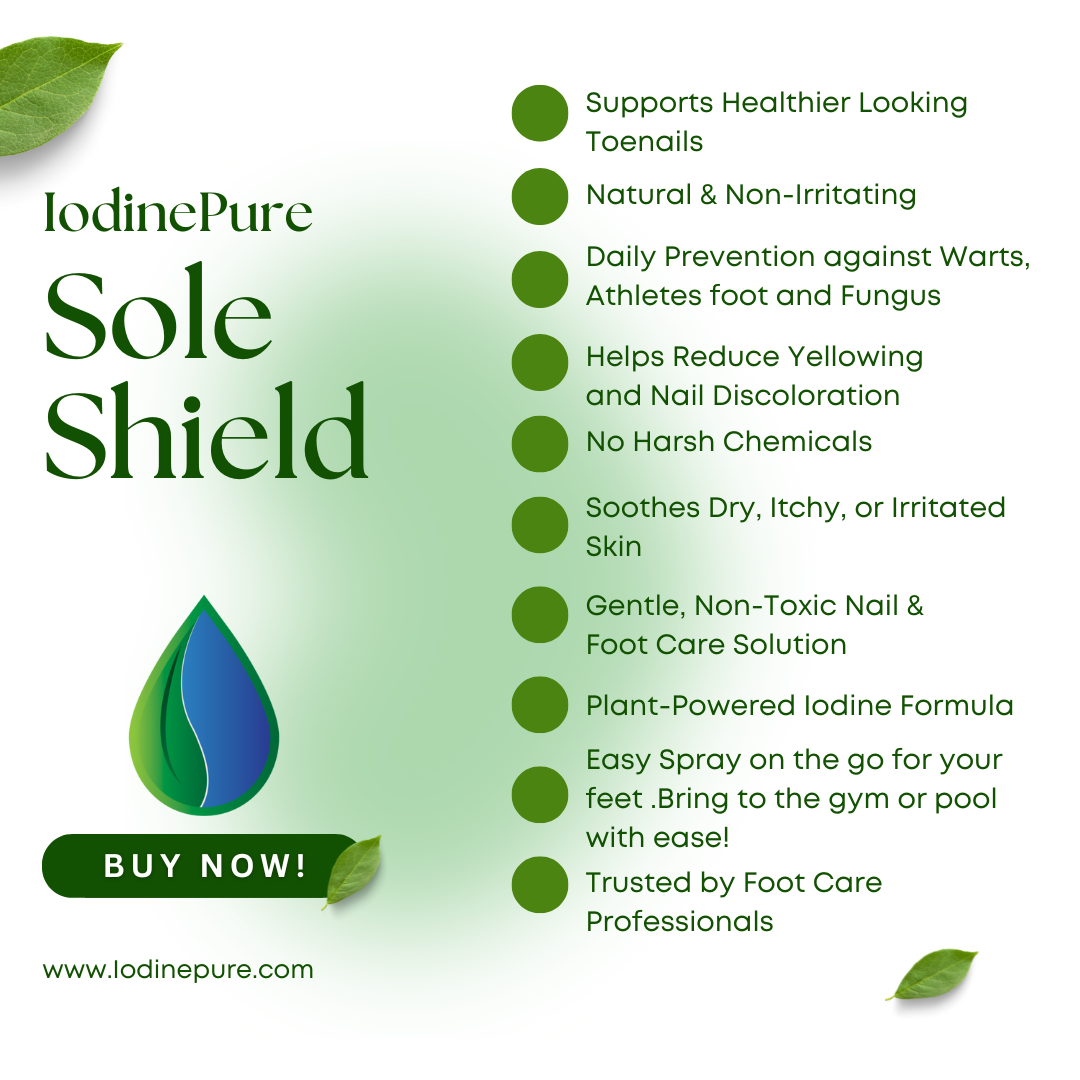
Sole Shield is a two-ingredient aqueous (water-based) iodine spray built for both halves of the problem: the feet themselves, and the inside of the footwear they live in. It's listed with Health Canada as a cosmetic.
Why do nurses use a foot spray after a shift?
Because twelve hours in non-slip closed clogs leaves feet damp, and the ward floor and the changing room are shared. A quick spray on the feet and inside the shoes at the end of a shift handles the sweat and the footwear in the same minute.
Nurses know this better than anyone, which is why so many keep a foot spray in their own routine for their own feet after a shift. The shoe matters as much as the spray, and our rundown of the best shoes for nurses in 2026 covers which ones actually let a foot breathe over a twelve hour shift. This is about looking after your own hard-working feet, plain and simple, the same way you'd reach for a good pair of compression socks.
How do you keep steel-toe boots from wrecking your feet?
Treat the boot, not just the foot. Steel-toe and safety boots are built for protection, not breathability. Worn ten to twelve hours a day, often without a chance to air out, they hold heat and moisture and can build a serious odour and fungus problem over time.
Spraying Sole Shield on the feet before the boots go on, and inside the boots after they come off, breaks that cycle at both ends. Because it goes inside the boot too, you're not putting clean feet back into the same environment every morning. The same approach works for warehouse, kitchen and construction footwear.
Laundry helps less here than people assume. When researchers washed dermatophyte-contaminated fabric, a 40°C wash left the spores viable and only 60°C removed them, and a week in the freezer and a pass through a heat dryer both failed. Work boots never see any of that.

Do runners, hockey players and wrestlers need a foot spray?
They get a double dose of the problem, so it earns its place. Athletes combine heavy sweat with shared surfaces. Runners rack up hours in damp shoes. Hockey players live in skates that never really dry.
Wrestlers and martial artists train barefoot on mats crossed by dozens of other feet, where athlete's foot, ringworm, and warts spread easily. Sole Shield can be sprayed on the feet after training and inside skates, cleats, and training shoes, and even on gear bags and mats, wherever sweat and shared contact create a fungal environment.
Re-exposure is the part most people underestimate. A review of shoe and sock sanitisation reported that recurrence and relapse rates for superficial fungal infections of the feet run from 10% to 53%, which is why the footwear step matters as much as the skin step.
What if you just have sweaty feet?
Same routine, no job title required. Some people simply sweat more through the soles. StatPearls notes that eccrine sweat glands are concentrated in the soles, palms, underarms and face, and that excessive sweating affects roughly 3% of people in the United States.
The approach doesn't change. Keep the feet clean and dry, treat the inside of your shoes, and rotate footwear so each pair can dry out between wears. A daily spray fits into that without adding a chore.
What kind of foot spray should you look for?
Most searches land on one of four labels: antibacterial foot spray, antimicrobial foot spray, foot sanitizer spray, or iodine foot spray. They all point at the same job, which is lowering the microbial load on the skin and inside the shoe. What separates them is the active ingredient and how much else is in the bottle.
Alcohol-based sprays dry fast and sting on cracked skin. Aluminium salts go after the sweat rather than the microbes. Fragranced sprays cover odour without touching what causes it. An iodine foot spray sits in the antiseptic group, and iodine has been used on skin since the 1800s, which is a long track record for something you're putting on your feet every day.
Whatever you pick, the real test is simple. Will you use it twice a day, on your feet and inside your shoes, for months? A spray you like the feel of beats a harsher one that stays in the cupboard.
How do you use a foot spray?
Two moments, not one. The feet after the shower, and the shoe when it comes off. Miss the second one and clean feet go straight back into the same environment the next morning.
- After showering, dry your feet completely — especially between the toes.
- Spray Sole Shield over the soles and between the toes, and let dry about 60 seconds before socks.
- Spray inside your shoes or boots — the toe box and insole — ideally after you take them off so they can air out and dry.
- Spray again after exposure to shared floors like locker rooms, showers, or training mats.

Frequently Asked Questions
What foot spray is best for nurses?
Nurses tend to want something simple for their own feet after long shifts in closed shoes. An aqueous iodine spray like IodinePure Sole Shield can be used on the feet and inside footwear daily to manage sweat, odour, and fungal exposure that come with hours on hospital floors.
How do I stop my work boots from smelling and growing fungus?
Spray your feet before your boots go on, spray inside the boots after they come off, and let them air out and dry between wears. Treating the boot interior matters as much as the feet, because that's where moisture and bacteria build up.
Can I use foot spray on skates, cleats, and gym gear?
Yes. Sole Shield is designed for feet, between the toes, and inside footwear, as well as skates, cleats, gym bags, and training mats — anywhere sweat and shared contact create a fungal environment.
What's the best spray for sweaty feet?
Look for something you'll use daily on both your feet and the inside of your shoes. A two-ingredient aqueous iodine spray is one low-fuss option that fits into a normal morning and post-shower routine.
Why do athletes get athlete's foot so often?
Athletes combine heavy sweat with shared surfaces — damp shoes and skates plus barefoot contact on mats and locker room floors. Keeping feet dry, treating footwear, and spraying after training all help reduce the risk.
Is there a foot spray for stinky feet?
Yes, and the ones worth buying work on what causes the smell instead of covering it. Foot odour comes from bacteria feeding on sweat, so a spray that goes on the feet and inside the shoe deals with both ends of it. A scented spray on its own just adds perfume to the same problem.
Should I use a foot spray, a powder, or both?
A powder soaks up moisture and a spray works on the surface, so they do different jobs. If your feet flood a boot every day, use both: spray after the shower and let it dry, then powder the sock or the insole before you lace up. If you only want one step, the spray is the one that also goes inside the shoe.
What's the difference between an antifungal foot spray and an antiseptic one?
Antifungal is a drug category. A product sold under that word is registered as a drug and carries a licence number tied to one named active ingredient, usually for a set course of a week or two. An antiseptic sits in a different lane and works on the surface of the skin and the inside of the shoe so the environment is less welcoming to what lands there. Sole Shield is listed with Health Canada as a cosmetic and is built for daily use.
Does foot spray stain a gi?
Not if you let it dry. Aqueous iodine goes on a light amber and fades as it dries, which takes about 60 seconds on clean skin. Spray, wait, then put your socks or your gi on. Spraying wet feet and pulling white cotton straight over them is how you end up with a mark.
Made for Feet That Work Hard
IodinePure Sole Shield — a two-ingredient aqueous iodine spray for feet and footwear, built for long shifts, closed boots, and shared training spaces. Listed with Health Canada as a cosmetic and carried by over 200 foot care clinics across North America.

About the Author
This article was reviewed by Evan Lewis, PhD, who specialises in natural and nutritional therapies for the prevention and management of chronic diseases and complications, with a focus on chronic disease, diabetes complications, clinical nutrition, and nerve health.