Reviewed by Evan Lewis, PhD. Last updated 10 August 2026.
A foot peel mask is an acid-soaked bootie that loosens the bonds between dead surface skin cells, so your feet shed in sheets about a week later. The result is real. It stops at the skin though, and leaves two things untouched: your toenails, and the inside of your shoes.
Few beauty products deliver a payoff this visible, which is why Baby Foot and its many imitators never go out of fashion. Here is what the peel actually does, the two things it does not touch, and what the week afterwards asks of you. We make a foot and shoe spray, so weigh this accordingly.
Key takeaways
- Foot peels work through acids, usually a fruit and lactic acid blend, that loosen the bonds between dead surface skin cells. The shedding is real and so is the result.
- A peel resurfaces skin. It does nothing for your toenails and nothing for the inside of your shoes.
- The week of shedding leaves freshly exposed skin, and you are putting it straight back into the same footwear every morning.
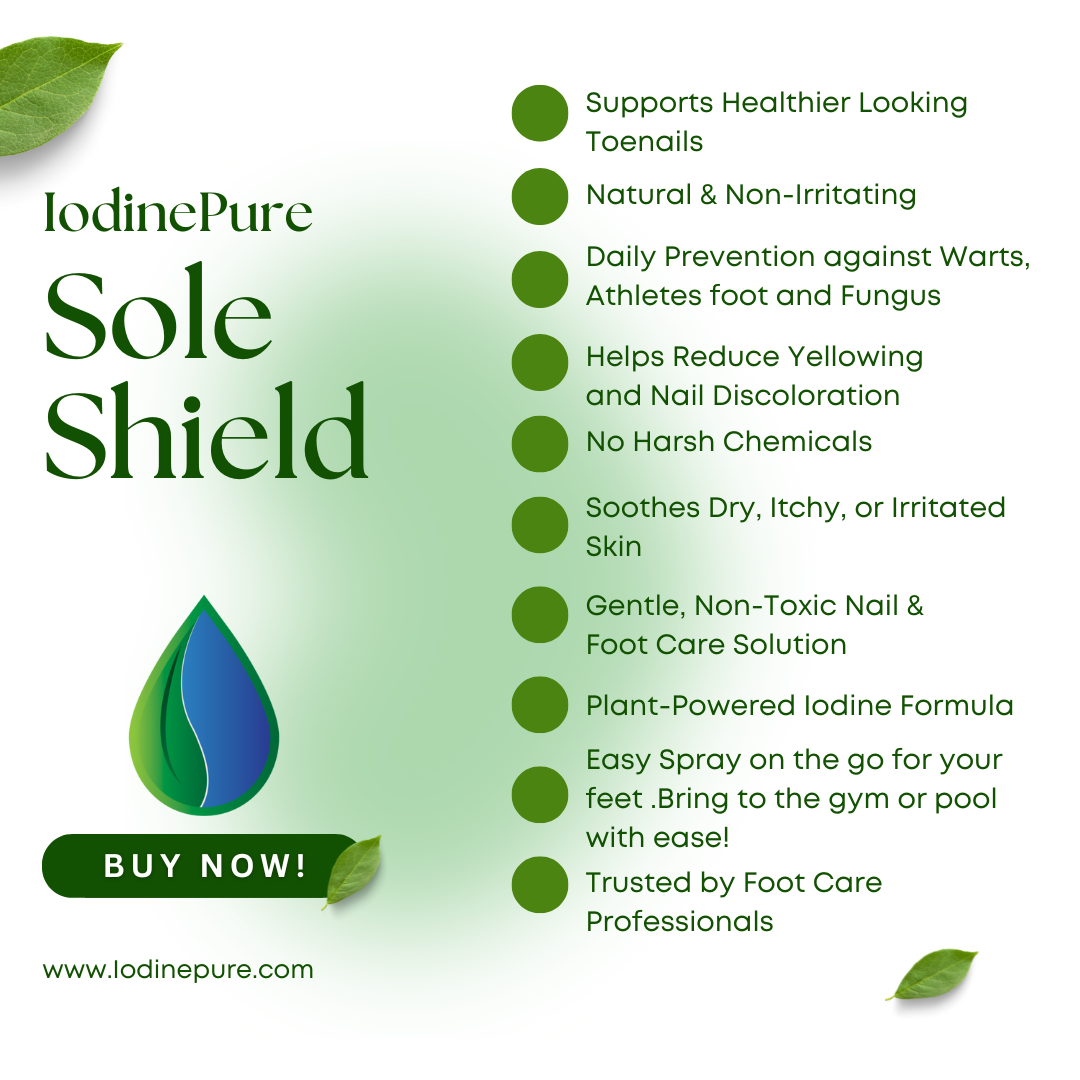
- Sole Shield is 2 ingredients, iodine and water, for feet and the shoes that keep re-contaminating them.
What does a foot peel actually do?
It exfoliates chemically rather than mechanically. Foot peel masks are plastic booties filled with an acid solution, typically a blend of fruit acids and lactic acid, sometimes with glycolic or salicylic acid alongside. You wear them for around an hour. The acids penetrate the thickened outer layer of skin and loosen the bonds holding dead cells together.
Nothing visible happens at first. Then, somewhere between day three and day seven, your feet begin shedding in sheets. It runs its course over one to two weeks and the skin underneath is genuinely softer and smoother than it was.
This is a real cosmetic result and the science behind it is sound. Chemical exfoliation of that scale is not something a pumice stone matches. Credit where it is due.
What does a foot peel not touch?
Two things, and they are the two most people were hoping it would fix.

The peel reaches the skin surface. The nail plate and the inside of the shoe sit outside its range.
1. Your toenails
A peel works on the stratum corneum, the dead outer layer of skin. A toenail is a dense keratin plate, and the acids in a peel are neither formulated nor concentrated to do anything to it. If a discoloured or thickened nail was part of why you wanted nicer-looking feet, the peel will leave it exactly as it was, now framed by noticeably better skin.
Nails are a separate project on a separate timeline. They grow about 1.62mm a month (Yaemsiri, JEADV 2010), which is roughly half the 3mm figure people quote from fingernails, so improving one is a matter of many months, not a weekend. Thick nails have their own approach, and it starts with softening and thinning rather than exfoliating.
2. The inside of your shoes
This is the one almost nobody thinks about. Your shoes are warm, dark, damp and essentially never washed. They are also where you have been shedding skin cells for months, and skin debris is exactly what feeds the microbial population living in there.
That environment has a documented cost. StatPearls notes that wearing occlusive shoes for extended periods predisposes people to dermatophyte infections, and that the risk climbs with heavy sweating. Washing does less than you would hope, either: in one set of experiments, a 40°C wash left dermatophyte spores viable and only 60°C removed them.
Then a peel drops the surface layer of your feet, and you put those freshly exposed feet straight back into the same untreated footwear. The peel changed your skin. It did not change the environment your skin spends twelve hours a day inside.
What does the week after a peel ask of you?
Patience, and one small habit. During and just after shedding, the skin is newer and thinner than it was, and it is going straight back into a closed shoe. That is the moment worth paying attention to, and it is where a simple routine matters more than another treatment.
Let the peel finish on its own. Do not pull at sheets that are still attached, do not add a scrub on top of it, and keep feet dry between wears. Then treat both halves of the environment: the foot, and the shoe.
Sole Shield is 2 ingredients, iodine and pure water. A 2020 review in Antimicrobial Agents and Chemotherapy describes how iodine rapidly penetrates into microorganisms and oxidizes key proteins, nucleotides, and fatty acids, with no observed link to resistance development, and iodine has been used on skin since the 1800s. Mist feet after showering once they are dry, and spray the inside of shoes, boots and skates after each wear. It is fast drying, it does not stain skin or socks, and it is used in 200+ foot care clinics across North America.
Foot peel or daily spray: how do they compare?
They are not competing. One is a reset every couple of months, the other is the housekeeping in between.
| Foot peel mask | Sole Shield | |
|---|---|---|
| What it is | Acid-soaked booties worn for about an hour | Two-ingredient iodine foot and shoe spray |
| What it does | Chemically exfoliates the dead outer skin layer | Broad-spectrum coverage on feet and inside footwear |
| Covers toenails? | No | Feet and skin. Nails have their own routine |
| Covers your shoes? | No | Yes, spray inside after each wear |
| How often | Every 6 to 8 weeks at most | Daily, takes about 60 seconds |
| Result | Dramatic one-off resurfacing | Maintenance of the environment between peels |
Our honest take
Use the peel. It does something no daily routine does, and there is nothing quite like the result.
Just be clear about what you bought. A peel is a reset for skin, not a routine and not a nail product. It is the deep clean, not the housekeeping. If you peel every couple of months and change nothing else, you are resurfacing feet that go straight back into an untreated environment, and you will be booking the next peel on schedule.
The pairing that makes sense: peel occasionally for the reset, run a daily foot and shoe habit in between, and treat the nails as their own separate 90-day project if they need one.

Sole Shield
For the feet you just uncovered, and the shoes they go back into.
✓ Two ingredients: iodine and pure water
✓ Broad-spectrum range covering bacteria and fungi
✓ Mist feet after showering, spray shoes after each wear
✓ 60ml, fast drying, no staining on skin or socks
✓ Used in 200+ foot care clinics across North America
Shop Sole ShieldCommon questions
Do foot peel masks actually work?
Yes, for what they are built to do. The acid blend loosens the bonds between dead surface skin cells, and the shedding that follows over one to two weeks leaves genuinely softer skin. It is a real cosmetic result. What it does not do is affect your toenails or the inside of your footwear.
Do foot peels help toenail fungus?
No. A peel works on the dead outer layer of skin, while a discoloured or thickened toenail is a dense keratin plate with the problem sitting in and under it. Nails are a separate routine on a separate timeline, since they grow only about 1.62mm a month, which makes a full toenail a 12 to 18 month project.
How often can you use a foot peel mask?
Most manufacturers suggest leaving 6 to 8 weeks between peels, because the skin needs time to rebuild the layer the peel removed. Check your product's own guidance. Peeling more often than the label recommends is not a shortcut to better results.
What should you do after a foot peel?
Let the shedding finish on its own rather than pulling at attached sheets, skip scrubs while it is in progress, and keep feet dry between wears. The step most people miss is the footwear: freshly exposed skin goes straight back into shoes that were never treated, so misting feet and spraying inside shoes keeps the environment from undoing the result.

The bottom line
Foot peels earn their popularity. They resurface skin in a way nothing else at home matches. They are simply a reset rather than a routine, and they stop at the skin: not the nails, and not the shoes.
If you want the rest of the picture, we covered the glycolic acid on feet hack, which works on similar chemistry, and what to put on your feet after the gym or a public shower.
Evan Lewis, PhD, specializes in natural and nutritional therapies for the prevention and management of chronic diseases and their complications. His research spans chronic disease, diabetes complications, clinical nutrition, and nerve health, including the development of topical iodine therapy for foot care and wound health. IodinePure products are listed with Health Canada as cosmetics. Baby Foot and other brand names are trademarks of their respective owners; ingredient information is from publicly available product labeling.