Reviewed by Evan Lewis, PhD. Last updated 10 August 2026.
After a gym shower, pool deck, or public change room, dry your feet completely and spray them with an aqueous iodine foot spray before your socks go back on. Those shared wet floors are where athlete's foot, foot fungus and plantar warts move from person to person.
A quick spray after exposure is one of the simplest ways to stay ahead of foot fungus and plantar warts.
Why Are Shared Wet Floors a Fungus and Wart Risk?
Because warm, damp shared surfaces are where these organisms transfer. Fungi and the virus that causes plantar warts thrive in warm, damp environments and spread through direct contact with contaminated surfaces. Gym showers, pool decks, locker rooms, communal change rooms, hotel bathrooms, and airport security lines are all places where lots of bare feet cross the same wet floor.
You can pick up athlete's foot, toenail fungus, or a wart without ever knowing you were exposed, because the contact is invisible and symptoms show up days or weeks later. If you use these spaces regularly, repeated exposure is the real problem, not any single visit.
The numbers are not small. StatPearls puts tinea pedis at approximately 10% of the total population, and notes the risk rises with excessive sweating and with occlusive shoes worn for long stretches. DermNet describes plantar warts as spread by direct skin-to-skin contact or autoinoculation, where picking or scratching a wart moves the virus to another patch of skin.

What Can You Catch From a Public Shower Floor?
Three things, mostly. Athlete's foot, fungal toenails, and plantar warts. That's the realistic list for a public shower foot infection, and all three travel the same way, in skin cells shed onto a wet floor that the next bare foot walks over.
Public shower foot disease sounds dramatic and the reality is duller. Nothing leaps off the tiles at you. The fungus needs skin that stays damp long enough to settle in, which is why the people who end up with it are usually the ones who dried in a hurry and went straight into socks and trainers. Broken skin counts too, so a fresh blister or a split heel is worth covering before you walk in.
What Should You Spray on Your Feet After Exposure?
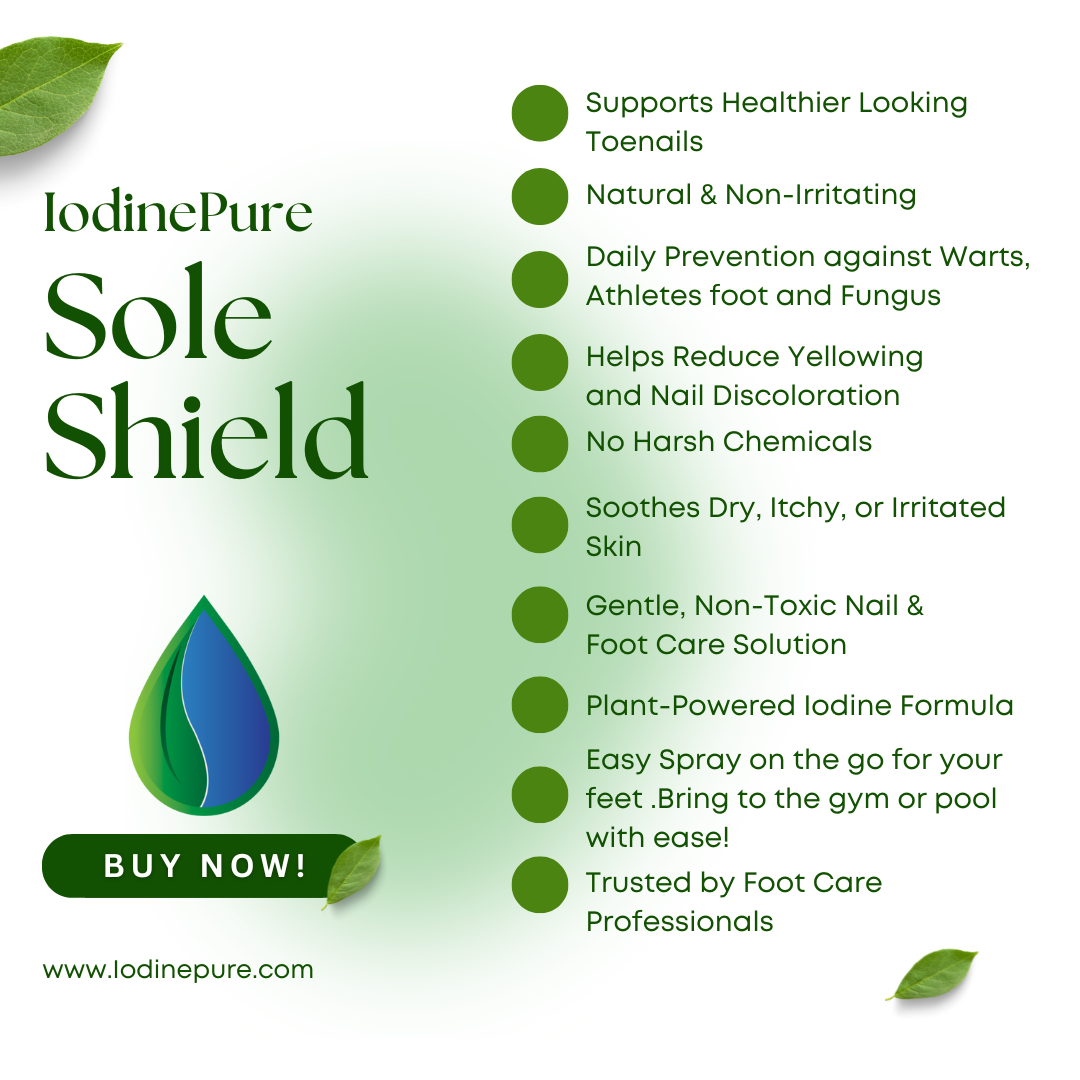
A simple, water-based antiseptic that dries fast and does not stain. IodinePure Sole Shield is an aqueous (water-based) iodine spray made for exactly this. Iodine has been used on skin in clinical settings since the 1800s, and Sole Shield puts it in a simple two-ingredient, non-staining spray you can keep in your gym bag.
After you've dried your feet, a few sprays over the soles and between the toes helps clean the skin of what you've just walked through. It's listed with Health Canada as a cosmetic and designed for daily, ongoing use.
When Should You Use It?
Any time your bare feet have been on a shared or public surface, including:
- After the gym, especially after using the showers, or after training barefoot on mats.
- After swimming, since pool decks and changing areas are consistently damp and heavily trafficked.
- After a public or communal shower: dorms, hostels, campgrounds, shared change rooms.
- After the locker room, even if you didn't shower. The floor is shared either way.
- While travelling: hotel bathrooms, airport security floors, cruise ships, and camp showers.
A 30-second after-exposure routine
- Dry your feet completely, particularly between the toes, where moisture lingers and fungus thrives.
- Spray Sole Shield over the soles and between the toes. Let it dry for about 60 seconds.
- Spray inside your shoes too, the toe box and the insole, so you're not putting clean feet back into a contaminated environment.
- Put on clean, dry socks.
That's it: under a minute, and it becomes automatic once the bottle lives in your gym bag next to your deodorant.

How Do You Prevent Athlete's Foot From a Gym Shower?
Keep something between your skin and the floor, then get dry quickly. Gym shower hygiene is really just those two ideas applied to the ten minutes between the last set and the car park.
- Put sandals on at the locker, not at the shower door. The walk is shared floor as well.
- Keep them on in the cubicle, and stay off the drain, where everyone's runoff collects.
- Bring your own towel, use it on your feet last, and wash it at 60°C rather than the gentle cycle.
- Dry between all four web spaces, not around the toes.
- Change into dry socks at the gym rather than at home, and give the trainers you trained in 48 hours to dry before they go back on.
That's the whole of public shower foot protection: a barrier, a proper dry, and dry socks. The spray step above sits on top of it.
Which Habits Matter Beyond the Spray?
Sandals, dry toes, and clean socks, mostly. Wear shower sandals or flip-flops in public showers and around pool decks rather than going barefoot, dry between your toes every time, change out of damp socks and sweaty shoes promptly, and let your shoes air out and dry fully between uses.
Wash socks hot while you are at it. In a 2022 study in the Journal of Fungi, dermatophyte spores survived a 40°C household wash and were only removed at 60°C, and neither freezing nor heat drying removed them. Gupta and Versteeg, reviewing shoe and sock sanitization in the Journal of the American Podiatric Medical Association, report recurrence and relapse rates of 10% to 53% for superficial fungal infections of the feet.
If you're prone to athlete's foot or already dealing with a nail issue, keeping the inside of your footwear treated matters just as much as your feet.
What Should You Put on Your Skin After the Gym?
The same thinking, applied above the ankles. Shower reasonably soon, get out of the damp kit instead of driving home in it, and dry the places that stay covered longest: the back, the chest, under a strap, anywhere a bag sat.
For breakout-prone or mat-rash-prone skin, EZ Clear Skin is the same two-ingredient idea as Sole Shield in a face and body format. One or two sprays on clean, dry skin, with no alcohol, no sting and no stain on a gym towel. If you train on mats, the shoulders and back are the parts worth including.
Frequently Asked Questions
What should I spray on my feet after the gym?
After drying your feet, an aqueous iodine foot spray such as IodinePure Sole Shield helps clean the skin of what you've walked through on shared floors. Spray the soles and between the toes, and spray inside your shoes too, before putting on clean socks.
Can you get foot fungus from a public shower or pool?
Yes. Fungi and the plantar wart virus spread through contact with warm, damp shared surfaces like shower floors, pool decks, and locker rooms. Wearing sandals, drying your feet thoroughly, and using a foot spray after exposure all help reduce the risk.
How do I avoid athlete's foot at the gym?
Wear shower sandals, never go barefoot in the showers or locker room, dry between your toes, change out of sweaty socks promptly, and spray your feet and the inside of your shoes after each session.
Does spraying my feet actually help?
Cleaning the skin after exposure, keeping feet dry, and treating the inside of your footwear all reduce the conditions fungus needs to take hold. A quick spray is a simple, low-effort addition to those habits.
Can I use the same spray on my shoes?
Yes. Sole Shield is designed for use on feet, between the toes, and inside footwear (toe box and insole), as well as on gear like gym bags, yoga mats, skates, and cleats.
What is good gym shower hygiene?
Sandals on from the locker to the cubicle and back, your own towel, feet dried last and between the toes, and dry socks before you leave the building. Wash the towel and the socks at 60°C rather than 40°C, since dermatophyte spores survived the cooler wash in laundry testing. Bare feet on the changing room floor undo most of the rest.
Keep One in Your Gym Bag
IodinePure Sole Shield is a two-ingredient aqueous iodine foot and footwear spray for daily use and after any exposure to shared wet floors. Listed with Health Canada as a cosmetic and carried by over 200 foot care clinics across North America.

About the Author
This article was reviewed by Evan Lewis, PhD, who specialises in natural and nutritional therapies for the prevention and management of chronic diseases and complications, with a focus on chronic disease, diabetes complications, clinical nutrition, and nerve health.