Reviewed by Evan Lewis, PhD. Last updated 10 August 2026.
Yes, the Lume on feet hack is real. Lume whole-body deodorant genuinely helps with foot odor, because its mandelic acid lowers skin pH so odor-causing bacteria struggle. But the hack treats your feet and skips your shoes, and the shoe is where the odor factory actually lives. We make Sole Shield, so weigh this accordingly.
- The Lume on feet hack works. Lume uses mandelic acid to lower skin pH so odor-causing bacteria struggle, and it's formulated without aluminum or baking soda.
- The hack covers the foot but skips the shoes. Shoes are warm, dark, damp, almost never washed, and they re-contaminate your feet every single morning.
- Odor is only half of what a closed shoe grows. The same environment feeds athlete's-foot fungus, and deodorant does nothing about fungus.
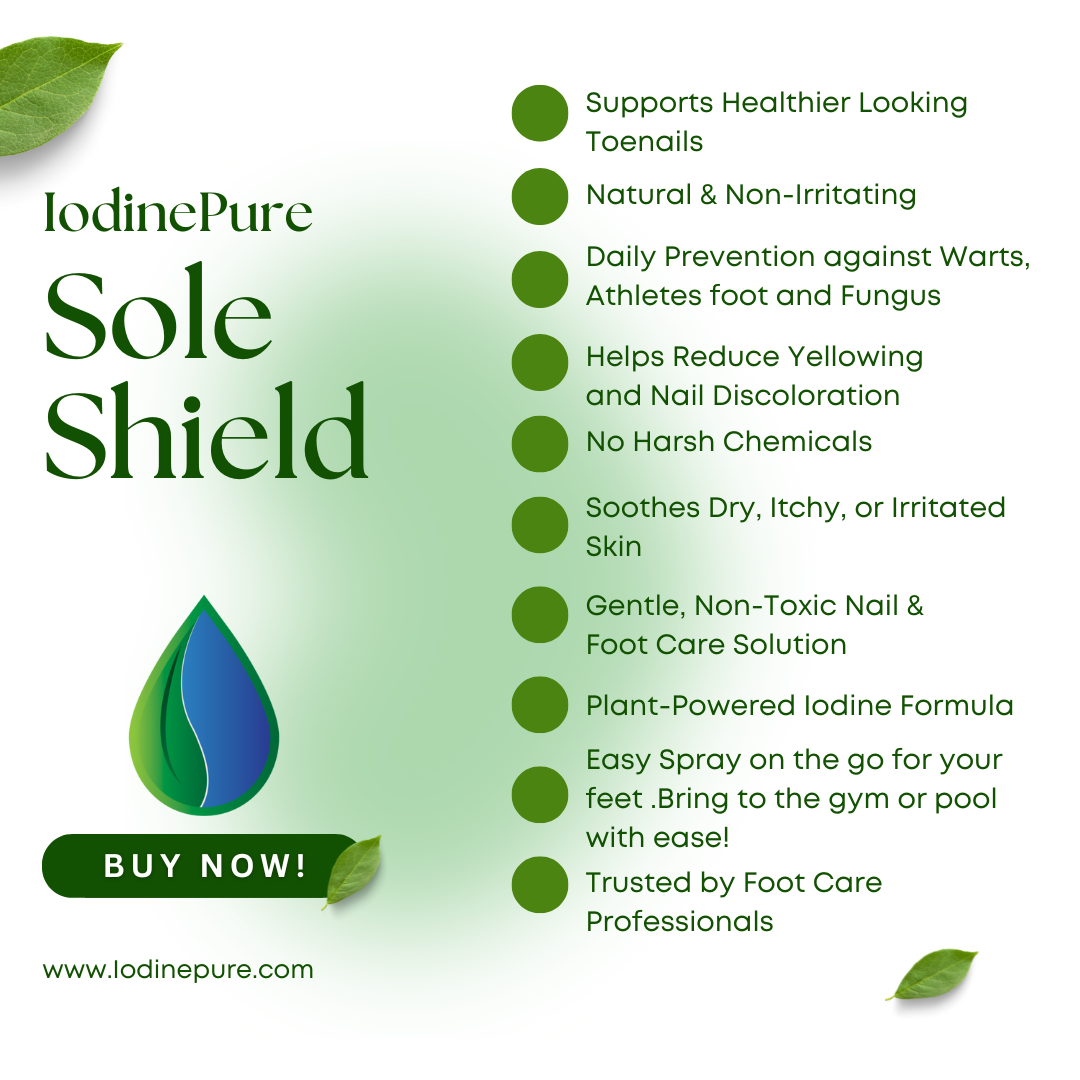
- Sole Shield is a two-ingredient aqueous iodine spray built for both jobs: mist your feet after showering, then spray inside your footwear after each wear.
What Is the Lume on Feet Hack?
It is people using whole-body deodorant on their soles and between their toes. Lume is a whole-body deodorant brand with cream, solid, and spray formats, and it's hugely popular for a reason. Instead of masking smell, its approach uses mandelic acid to lower your skin's pH. Odor-causing bacteria struggle in that environment, so less odor gets made in the first place. It's formulated without aluminum and without baking soda.
The foot is a fair target for it. Eccrine sweat glands are concentrated in areas such as the axillae, palms, soles, and face, so the sole is one of the sweatiest surfaces you own.
Somewhere along the way, TikTok figured out that "whole body" includes feet. People started swiping it on their soles and between their toes, and the videos blew up because the hack delivers. Foot odor is mostly a bacteria problem, and Lume is built to make life hard for those bacteria. It is not the only foot hack that went big on the same feed. Foot peel masks like Baby Foot got there first, and they work on the skin surface itself rather than on what is living on it.
Credit where it's due. It's a clever use of a well-made product. The same is true of Mando, the other big whole-body deodorant people use this way, and everything below applies equally to it.
What Is Sole Shield?
Sole Shield is two ingredients: iodine and water. Iodine is the mineral whose published record describes activity spanning bacteria and fungi, and it's been used on skin in clinical settings since the 1800s.
A 2020 review in Antimicrobial Agents and Chemotherapy describes how iodine rapidly penetrates into microorganisms and oxidizes key proteins, nucleotides, and fatty acids, and reports no observed link to resistance development. That is a different mechanism from lowering the pH of skin.
To be clear about what it is not: Sole Shield is not a deodorant. It contains no fragrance and nothing that masks a smell. It works on the microbes involved rather than covering anything up, which is a different job from deodorising.
The routine covers both halves of the problem. Mist your feet after showering, once they're dry. Then spray inside your shoes, boots, or skates after each wear. The 60ml bottle is fast-drying and fits a gym bag, so the shoe step actually happens instead of staying a good intention. It's listed with Health Canada as a cosmetic and it's used in 200+ foot care clinics across North America.
That shoe step is the whole point. Your foot spends all day sealed inside a warm, dark, damp box that never gets washed. You can start every morning with clean, deodorized feet and slide them straight back into yesterday's ecosystem. Treat only the foot and you're playing defense against your own footwear.
How Do Lume and Sole Shield Compare?
Both work against the bacteria behind foot odor. Only one of them also goes inside the shoe, and only one of them was chosen for a range that covers fungi as well.
| Lume on feet | Sole Shield | |
|---|---|---|
| What it is | Whole-body deodorant used on feet | Two-ingredient aqueous iodine foot and shoe spray, not a deodorant |
| How it works | Mandelic acid lowers skin pH so odor-causing bacteria struggle | Iodine, a broad-spectrum antimicrobial mineral, in pure water |
| Range | Aimed at odor-causing bacteria | Covers bacteria and fungi |
| Covers your shoes? | No, it's applied to skin | Yes, spray inside shoes, boots, and skates after each wear |
| Formats | Cream, solid, and spray | 60ml fast-drying spray that fits a gym bag |
| Formulated without | Aluminum and baking soda | Anything beyond iodine and water |
| Who's behind it | Hugely popular whole-body deodorant brand | Listed with Health Canada as a cosmetic; used in 200+ foot care clinics across North America |
Does the Lume on Feet Hack Actually Work?
Yes, on the foot itself. Keep Lume for your body, and keep it on your feet too if you like how it's working. It's a well-designed deodorant and the feet hack is a legitimate use of it.
The upgrade isn't swapping products. It's adding the step the hack skips. Deodorize the foot, ignore the shoe, and the shoe wins eventually, because it re-seeds your skin every time you lace up.
And in a closed shoe, odor bacteria aren't the only tenants. StatPearls notes that wearing occlusive shoes for extended periods predisposes patients to dermatophyte infections, and that the risk rises with excessive sweating. Athlete's-foot fungus loves the exact same warm, damp conditions, and no deodorant is aimed at fungus.
Coming back is normal too. Gupta and Versteeg, writing in the Journal of the American Podiatric Medical Association on shoe and sock sanitization, report that recurrence and relapse rates for superficial fungal infections of the feet run from 10% to 53%.
So either add a shoe spray to your Lume routine, or use one bottle that was built for both jobs from the start. That's the whole pitch.

Sole Shield
One spray for your feet and the shoes that keep re-contaminating them.
✓ Two ingredients: iodine and water
✓ Broad-spectrum range covers bacteria and fungi
✓ Mist feet after showering, spray shoes after each wear
✓ 60ml, fast-drying, fits a gym bag
✓ Used in 200+ foot care clinics across North America
Shop Sole ShieldCommon questions
Can you use Lume on your feet?
Yes. Lume is a whole-body deodorant, and feet are part of the whole body. The viral hack works because foot odor is mostly a bacteria problem, and Lume's mandelic acid approach lowers skin pH so odor-causing bacteria struggle.
Why do my feet still smell after using deodorant?
Usually because the shoes never got treated. Footwear is warm, dark, damp, and almost never washed, so it re-contaminates clean feet every time you put it on. Treating the foot without treating the shoe means starting over every morning.
Does foot deodorant help with athlete's foot?
Deodorants are aimed at odor-causing bacteria, and athlete's foot is fungal, so a deodorant isn't built for that job. The same closed-shoe environment feeds both problems, which is why iodine's broad-spectrum range, covering bacteria and fungi, is the reason we chose it for Sole Shield.
Is Lume or Mando better for feet?
They sit in the same category and the same limitation applies to both: each is a whole-body deodorant aimed at odor-causing bacteria on skin, and neither treats the inside of your footwear or is built for fungus. We looked at Mando on feet in its own comparison here.
How do I stop my shoes from smelling?
Treat the inside of the shoe itself, after each wear, and let pairs dry out between wears. A fast-drying spray misted into shoes, boots, and skates deals with the source instead of the symptom on your skin.
The bottom line
The Lume on feet hack deserves its views. It's a real fix for the foot half of the problem. The step it skips is the shoe half, and in closed footwear that half includes fungus, not just odor. If you want the full picture, read our guides on how to get rid of foot odor for good, why your shoes smell and the real fix, and the same argument applied to Mando.
Evan Lewis, PhD, specializes in natural and nutritional therapies for the prevention and management of chronic diseases and their complications. His research spans chronic disease, diabetes complications, clinical nutrition, and nerve health, including the development of topical iodine therapy for foot care and wound health. IodinePure products are listed with Health Canada as cosmetics. Lume and Mando are trademarks of their respective owners; product information is from publicly available labeling and materials.